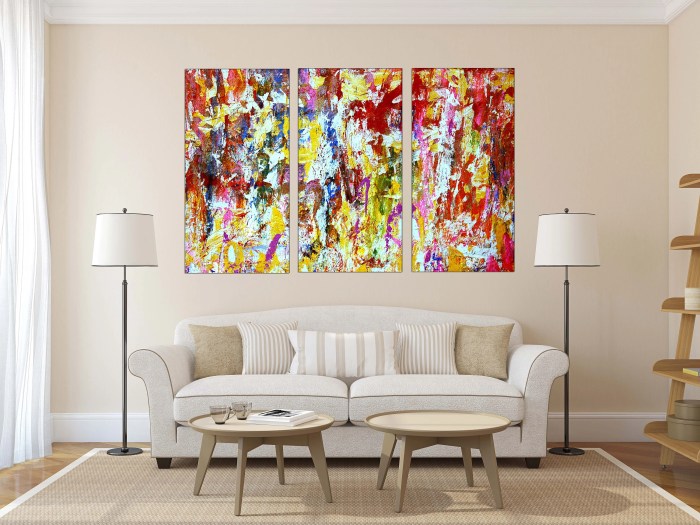
Abstract wall art transcends mere decoration; it’s a powerful statement, a conversation starter, and a window into the artist’s soul. From the bold strokes of Jackson Pollock to the subtle nuances of contemporary minimalist pieces, abstract art offers a unique blend of emotion, technique, and visual impact. This exploration delves into the diverse world of abstract wall art, examining its history, techniques, and its transformative role in interior design.
We’ll unpack the defining characteristics of abstract art, differentiating it from other art forms, and explore the various materials and techniques employed in its creation. We’ll also investigate the emotional resonance of common themes and motifs, and how abstract art can dramatically alter the atmosphere of a space. Finally, we’ll offer guidance on creating your own abstract masterpiece, regardless of your skill level.
Popular Themes and Motifs in Abstract Wall Art

Abstract art, while seemingly devoid of representational imagery, is rich with underlying themes and motifs that resonate deeply with viewers. These themes often tap into universal human experiences and emotions, transcending cultural boundaries and allowing for diverse interpretations. The artist’s skillful manipulation of color, shape, and texture serves as a powerful tool in conveying these underlying ideas.Abstract art frequently employs symbolic language to communicate ideas and feelings indirectly.
This allows for a greater degree of personal engagement from the observer, as the meaning is not explicitly stated but rather discovered through individual interpretation. The absence of literal representation allows for a freedom of expression and interpretation rarely found in other art forms. This inherent ambiguity is a key characteristic of abstract art’s enduring appeal.
Nature as a Theme in Abstract Art
Many abstract artists draw inspiration from the natural world, translating its essence into non-representational forms. The fluidity of water, the ruggedness of mountains, or the delicate intricacies of a flower can all be expressed through abstract compositions. Artists often use flowing lines and soft color palettes to evoke a sense of calm and serenity, mirroring the tranquility of a natural landscape.
Conversely, sharp angles and contrasting colors might depict the chaotic energy of a storm or the raw power of a volcano. For example, imagine a piece featuring swirling blues and greens, textured to mimic the movement of water, conveying a sense of peaceful flow and tranquility. Alternatively, a piece with jagged lines in fiery reds and oranges might evoke the raw power and intensity of a raging fire.
Emotional States as Motifs in Abstract Art
Abstract art excels at conveying a wide range of emotions without relying on literal depictions. Joy might be represented through vibrant, bright colors and energetic brushstrokes, while sorrow could be expressed through muted tones and somber shapes. Anxiety could be communicated through sharp, chaotic lines and unsettling color combinations. The use of texture also plays a crucial role; a rough, heavily textured surface might suggest a sense of unease or turmoil, while a smooth, polished surface might represent calmness or serenity.
Consider a piece dominated by deep blues and purples, with soft, blended edges, potentially conveying a feeling of melancholy or introspection. In contrast, a work featuring bright yellows and oranges, applied with bold, energetic strokes, could convey feelings of exuberance and joy.
Geometric Abstraction and its Symbolic Power
Geometric abstraction, characterized by the use of precise shapes and lines, often carries symbolic weight. Circles can represent wholeness or infinity, while squares and rectangles might suggest stability and order. Triangles can symbolize dynamism or conflict, depending on their orientation and arrangement within the composition. The interplay of these geometric forms creates a visual dialogue that can evoke a range of feelings and ideas.
For instance, a piece featuring perfectly balanced squares and rectangles in muted earth tones might suggest a sense of groundedness and harmony. A piece utilizing sharp, contrasting triangles in bold colors could evoke a sense of tension and dynamic energy.
- Theme: Serenity: Visual representation: Soft, flowing lines; pastel color palette; smooth textures. Imagine a canvas predominantly light blue and lavender, with subtle, curving lines that suggest gentle breezes or flowing water. The texture is smooth, almost silken to the touch.
- Theme: Energy: Visual representation: Bold, contrasting colors; sharp angles; rough textures. Picture a piece with vibrant reds, yellows, and oranges, applied with thick, impasto brushstrokes. The canvas is heavily textured, almost three-dimensional in its roughness.
- Theme: Mystery: Visual representation: Dark, muted colors; ambiguous shapes; layered textures. Envision a canvas in deep blues, blacks, and grays, with indistinct shapes that shift and change depending on the viewer’s perspective. The texture is complex, with layers of paint creating depth and intrigue.
Abstract Wall Art in Interior Design
Abstract wall art offers a versatile and powerful tool for enhancing the aesthetic appeal of any interior space. Its non-representational nature allows it to complement a wide range of design styles, adding depth, texture, and personality to a room without imposing a specific theme. The strategic use of abstract art can transform a bland environment into a vibrant and engaging space, reflecting the homeowner’s unique taste and style.Abstract art’s impact on interior design is multifaceted, relying heavily on the interplay of size, color, and artistic style.
Careful consideration of these elements is crucial for achieving the desired atmosphere and visual harmony within a room. For instance, a large, bold abstract piece can become a focal point, anchoring the design, while smaller, more subtle pieces can add texture and visual interest without overwhelming the space. Similarly, color choices directly influence mood and energy levels, and the artistic style—whether geometric, expressionistic, or minimalist—will profoundly impact the overall aesthetic.
The Influence of Size, Color, and Style on Room Atmosphere
The size of an abstract artwork significantly impacts its visual weight and influence on a room’s atmosphere. A large-scale piece can command attention and create a dramatic focal point, suitable for spacious living rooms or entryways. Conversely, smaller pieces can be used to subtly enhance a space without overpowering it, perfect for hallways or smaller rooms. Color plays a vital role in setting the mood.
Bold, vibrant colors create energy and excitement, while softer, muted tones promote relaxation and tranquility. The style of the abstract art—geometric, organic, textural—also contributes to the overall feel. Geometric abstracts often lend a modern, clean aesthetic, while organic forms evoke a sense of nature and fluidity.
Incorporating Abstract Wall Art into Various Room Settings
Abstract art’s adaptability makes it suitable for a wide range of rooms. In living rooms, large, colorful pieces can create a bold statement, while smaller, more subdued works can complement existing décor. Bedrooms benefit from calming, serene abstract art in softer palettes, promoting relaxation. Offices can incorporate abstract art to stimulate creativity and inspire productivity, choosing pieces with energetic colors or dynamic compositions.
Examples of Abstract Wall Art in Different Room Types
| Room Type | Art Style | Color Palette Suggestion | Description of the Visual Effect |
|---|---|---|---|
| Living Room | Geometric Abstraction | Deep blues, gold accents | Creates a sophisticated and modern atmosphere, drawing the eye to a central focal point. |
| Bedroom | Soft, organic shapes | Pastel pinks, muted greens | Promotes a calming and serene environment conducive to sleep. The gentle curves and soft colors create a soothing effect. |
| Office | Dynamic, energetic lines | Vibrant oranges, deep reds | Stimulates creativity and productivity; the bold colors and energetic composition invigorate the space. |
| Dining Room | Textural Abstract | Earthy tones, browns, and creams | Creates a warm and inviting atmosphere, complementing the communal nature of the space. The textured surface adds visual interest. |
Abstract wall art, in its multifaceted forms, offers a boundless avenue for self-expression and aesthetic enhancement. From understanding its historical context to mastering basic techniques, this exploration provides a comprehensive overview, empowering you to appreciate, select, and even create your own striking pieces. Whether you’re an art enthusiast, an interior designer, or simply seeking to personalize your living space, the world of abstract wall art promises a journey of discovery and creative inspiration.
General Inquiries
How do I choose abstract art for my living room?
Consider your room’s size, color palette, and existing furniture. A large, bold piece can anchor a space, while smaller works can complement existing décor. Match the art’s energy to the room’s function – calming pieces for bedrooms, vibrant ones for living rooms.
How can I care for my abstract wall art?
Care depends on the material. Canvas paintings should be kept away from direct sunlight and excessive humidity. Avoid touching the surface directly. Glass-covered pieces can be cleaned with a soft cloth and glass cleaner.
What are some affordable options for abstract wall art?
Prints are a great budget-friendly option. Many online retailers and local shops offer high-quality prints of abstract art at various price points. You can also explore DIY options, like creating your own abstract painting.
Where can I find inspiration for abstract art?
Browse art galleries online and in person, explore artist websites and social media, and visit museums to see abstract art in context. Pinterest and Instagram are also excellent resources for discovering new artists and styles.


