
Minimalist wall art transcends mere decoration; it’s a statement of intention, a reflection of a curated aesthetic. This exploration delves into the core principles of minimalist wall art, examining its defining characteristics, diverse styles, and the psychological impact it holds. We’ll uncover the materials and techniques employed, offering practical guidance on placement, integration, and creating a cohesive visual narrative within your space.
From understanding color palettes and exploring unconventional materials to considering the emotional response minimalist art evokes, this guide provides a comprehensive overview for both seasoned art enthusiasts and those newly embracing this clean, impactful style. We will also touch upon the broader history of wall art, offering a context for appreciating the unique power of minimalism.
Defining Minimalist Wall Art
Minimalist wall art is a style characterized by its simplicity, clean lines, and intentional reduction of elements. It prioritizes a sense of calm and balance, often using a limited color palette and focusing on the inherent beauty of form and shape. This approach contrasts sharply with more ornate or busy styles, aiming instead for a feeling of understated elegance and sophistication.Minimalist wall art encompasses a broad range of styles, yet maintains a core philosophy of less is more.
The impact is derived not from complexity, but from carefully considered choices regarding form, color, and composition.
Styles of Minimalist Wall Art
Several distinct styles fall under the umbrella of minimalist wall art. Geometric abstraction, for instance, frequently utilizes simple shapes like squares, circles, and triangles arranged in balanced compositions. Another popular style is monochromatic art, employing varying shades of a single color to create depth and visual interest. Line art, using just lines to create images or patterns, is also a prominent style within minimalism.
Finally, abstract expressionism, while not strictly minimalist, can feature minimalist elements when it emphasizes simple forms and limited color palettes.
Five Design Principles of Minimalist Wall Art
The effectiveness of minimalist wall art hinges on adherence to several core principles. First, simplicity is paramount; every element should have a purpose and contribute to the overall composition. Second, balance is key, ensuring visual equilibrium and avoiding visual clutter. Third, negative space, or the empty area around the artwork, is intentionally utilized to enhance the impact of the featured elements.
Fourth, a limited color palette, often monochromatic or featuring only two or three colors, creates a sense of unity and harmony. Fifth, clean lines and geometric forms are frequently employed, contributing to the overall sense of order and simplicity.
Color Palettes in Minimalist Wall Art
Color plays a crucial role in minimalist wall art, even within its restricted usage. Monochromatic palettes, using various shades and tints of a single color, are extremely common, creating a sense of subtle variation and depth. For example, a piece might utilize varying shades of gray, from light silver to deep charcoal, to achieve a sophisticated and elegant effect.
Alternatively, a minimalist piece might employ a complementary color scheme, using two colors opposite each other on the color wheel, such as blue and orange or purple and yellow. These contrasting colors, used sparingly, can create a striking visual impact while still adhering to the principles of minimalism. Earth tones, such as muted browns, greens, and beiges, are another popular choice, evoking a sense of natural calm and serenity.
Materials and Techniques Used in Minimalist Wall Art
Minimalist wall art, characterized by its simplicity and focus on essential forms, relies on a careful selection of materials and techniques to achieve its desired effect. The choice of materials directly impacts the overall aesthetic and longevity of the piece, while the techniques employed determine the final expression of the artist’s vision. A thoughtful combination of both is crucial in creating a truly impactful minimalist artwork.
The materials used in minimalist wall art are often chosen for their inherent qualities – their texture, color, and the way they interact with light. Similarly, the techniques are carefully selected to enhance these qualities, creating a harmonious whole. The restraint in both material and technique is a key characteristic of this artistic style.
Common Materials for Minimalist Wall Art
Minimalist art frequently utilizes materials that are both visually understated and durable. Canvas remains a popular choice, providing a versatile surface for painting and printmaking. Wood, in its natural or treated state, offers a tactile and often organic element. Metal, especially in sleek, unadorned forms, contributes a modern and industrial feel. Other frequently used materials include concrete, for its textural qualities, and paper, for its simplicity and adaptability.
The choice of material often reflects the overall theme and desired aesthetic of the artwork.
Artistic Techniques in Minimalist Wall Art
The techniques used in minimalist wall art are equally significant. Painting, with its ability to create subtle gradations of color and texture, is a cornerstone technique. Printmaking, particularly screen printing or lithography, allows for clean lines and precise repetition, reflecting the minimalist emphasis on order and precision. Sculpture, often using simple geometric forms, adds a three-dimensional element, while the techniques of welding and casting become integral to the final product.
Finally, even the simple act of arranging found objects can create a minimalist statement piece.
Material Comparison Table
| Material | Pros | Cons | Suitable Techniques |
|---|---|---|---|
| Canvas | Versatile, readily available, accepts various paints and mediums. | Can be susceptible to damage, requires careful handling and framing. | Painting, printmaking |
| Wood | Durable, natural texture, can be easily shaped and stained. | Can be heavy, requires specific tools for working, susceptible to warping. | Carving, burning, staining, painting |
| Metal | Modern aesthetic, durable, reflective qualities. | Can be difficult to work with, requires specialized tools, can be expensive. | Welding, cutting, polishing, painting |
Unconventional Materials for Minimalist Wall Art
The inherent simplicity of minimalist art lends itself to experimentation with unusual materials. Exploring beyond traditional options can lead to unique and striking results.
Expanding the range of materials used introduces new textures, colors, and forms, enriching the minimalist aesthetic. The following materials demonstrate the potential for innovation within the minimalist framework.
- Recycled plastic: Offering a sustainable and textural alternative.
- Natural fibers (e.g., hemp, jute): Providing organic textures and earthy tones.
- Found objects (e.g., pebbles, driftwood): Creating unique compositions through arrangement.
- Enamel pins: Building intricate patterns and shapes through precise placement.
- Dried flowers and plants: Adding subtle organic elements and color.
Placement and Integration of Minimalist Wall Art
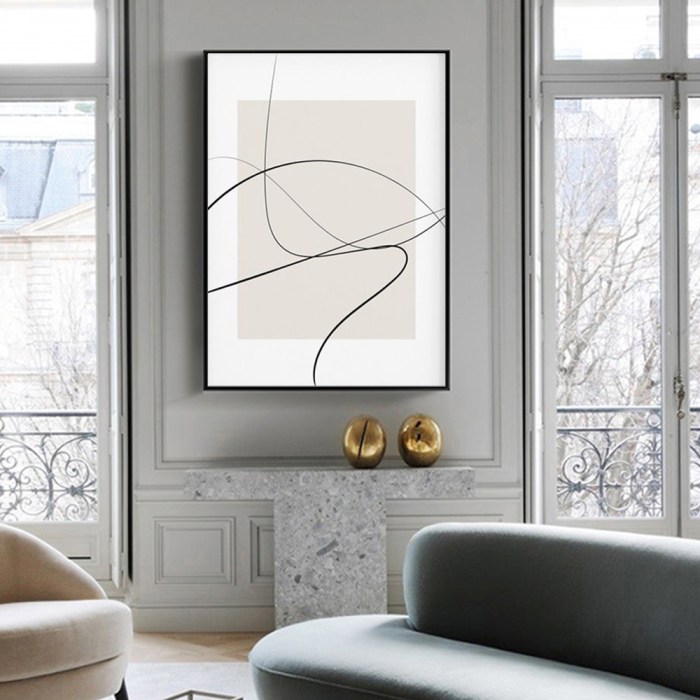
Minimalist wall art, with its clean lines and uncluttered aesthetic, possesses a remarkable versatility that allows it to seamlessly blend into a wide array of interior design styles. Its inherent simplicity makes it a powerful tool for enhancing existing decor rather than dominating it, creating a sense of calm and sophistication. Strategic placement and careful consideration of scale are key to unlocking its full potential.The understated nature of minimalist art means it complements various styles effectively.
For example, its clean lines and neutral palettes harmonize beautifully with modern, Scandinavian, and even some contemporary styles. Conversely, a single, bold piece can add a striking contrast against more eclectic or maximalist backgrounds, providing a focal point without overwhelming the space. The key lies in understanding the existing design language and choosing art that either echoes or subtly counterpoints it.
Minimalist Wall Art in Different Room Settings
Integrating minimalist wall art effectively requires considering the function and mood of each room. In the living room, a large, abstract canvas above the sofa can create a sophisticated focal point, grounding the space. A series of smaller, geometric prints arranged in a grid pattern could work well on a larger wall, adding visual interest without disrupting the overall flow.
In contrast, a bedroom might benefit from a single, calming piece above the bed, such as a monochromatic landscape or a subtle geometric design. The goal here is to create a serene atmosphere conducive to relaxation. An office space could incorporate minimalist art to promote focus and productivity. A simple line drawing or a geometric print in muted tones can add a touch of personality without distracting from work.
The art’s placement should ideally be in a peripheral area, out of the direct line of sight but still visible, to create a subtle yet positive impact on the environment.
Choosing the Right Size and Placement of Minimalist Wall Art
The size and placement of minimalist wall art significantly influence its visual impact. A piece that is too small will be lost in a large room, while one that is too large will overwhelm the space. A good rule of thumb is to consider the scale of the furniture and the wall itself. For instance, a large piece of minimalist art should be proportional to a large sofa or wall, while smaller pieces can be used effectively in smaller spaces or to fill smaller wall areas.
The placement should also consider the existing furniture arrangement. Avoid placing art directly behind furniture, which would obstruct the view and minimize its effect. Ideally, the art should be placed at eye level or slightly above, allowing for comfortable viewing without straining the neck.
The Influence of Lighting on Minimalist Wall Art
Lighting plays a crucial role in enhancing the visual impact of minimalist wall art. The subtle nuances of color and texture in minimalist pieces are often best appreciated in soft, diffused lighting. Harsh, direct lighting can wash out the colors and detract from the overall effect. Consider using strategically placed spotlights or track lighting to highlight specific pieces, or incorporate ambient lighting to create a more relaxed and inviting atmosphere.
The type of lighting used should complement the style and color palette of the art and the room itself. For instance, warm, incandescent lighting might be more suitable for a minimalist piece with earthy tones, while cooler, LED lighting could enhance the crispness of a geometric design.
The Psychology and Impact of Minimalist Wall Art
Minimalist wall art, characterized by its simplicity and intentional lack of clutter, exerts a surprisingly profound psychological impact on viewers. Its clean lines and unfussy aesthetic contribute significantly to the overall atmosphere of a space, affecting mood and perception in subtle yet powerful ways. Understanding this impact allows for a more informed and effective use of minimalist art in interior design.Minimalist wall art fosters a sense of calm and order by reducing visual stimulation.
The absence of overwhelming detail allows the eye to rest, reducing mental fatigue and promoting a feeling of tranquility. This effect is particularly beneficial in spaces designed for relaxation, such as bedrooms or meditation rooms. The clean lines and muted color palettes often associated with this style further enhance this sense of peace, creating a visual sanctuary from the often chaotic external world.
Emotional Responses to Minimalist Wall Art
The emotional response evoked by minimalist wall art is largely dependent on the specific piece and the viewer’s personal preferences. However, common feelings include serenity, focus, and a sense of spaciousness. The simplicity of the artwork allows the viewer to focus on the essential elements, fostering a meditative state. This contrasts sharply with more ornate styles, which can overwhelm the senses and lead to feelings of anxiety or restlessness.
A viewer might feel a sense of quiet contemplation when observing a single, perfectly balanced line drawing, for instance, or a feeling of expansive freedom when looking at a large canvas with a single, bold color. The lack of competing visual elements allows for a more direct and personal connection with the artwork.
Comparison with Ornate Styles
In contrast to ornate styles that are rich in detail and often feature vibrant colors and complex patterns, minimalist wall art prioritizes simplicity and restraint. Ornate styles, while beautiful in their own right, can be visually overwhelming, creating a sense of busyness and potentially even causing sensory overload. Minimalist art, on the other hand, offers a sense of visual breathing room.
The impact is a shift from a feeling of being bombarded with information to one of calm contemplation. For example, a Baroque-style painting might feature intricate details, rich textures, and a complex composition, potentially leaving the viewer feeling stimulated but possibly also overwhelmed. Conversely, a minimalist geometric print might offer a feeling of clarity and tranquility.
Key Elements Contributing to Aesthetic Appeal
Several key elements contribute to the overall aesthetic appeal of minimalist wall art. These include the use of negative space, a limited color palette, clean lines, and a focus on form and shape. The strategic use of negative space—the empty areas around the central element—creates a sense of balance and enhances the impact of the artwork. A limited color palette, often featuring neutral tones or a single dominant color, promotes visual harmony and reduces visual clutter.
Clean lines and geometric shapes convey a sense of order and precision, contributing to the overall feeling of calm and serenity. The focus on form and shape allows viewers to appreciate the fundamental elements of design, promoting a deeper engagement with the artwork’s aesthetic qualities. For instance, a simple black and white photograph showcasing a single, stark object against a blank background is a prime example of how these elements work together to create a visually appealing and emotionally resonant piece.
Wall Art in General (Broader Context)
Wall art, in its broadest sense, encompasses any decorative or artistic element affixed to a wall. Its history is as long and varied as human civilization itself, reflecting cultural beliefs, technological advancements, and aesthetic sensibilities across diverse societies and time periods. From prehistoric cave paintings to contemporary digital installations, wall art serves as a powerful medium for self-expression, storytelling, and cultural transmission.The evolution of wall art is a fascinating journey through human history.
Early forms, such as the cave paintings of Lascaux and Chauvet, served primarily ritualistic and narrative purposes. Ancient Egyptian tomb paintings depicted scenes from daily life and the afterlife, while the vibrant frescoes of Pompeii showcased the artistic sophistication of Roman civilization. The Renaissance witnessed a flourishing of wall art, with monumental frescoes and panel paintings adorning churches, palaces, and private residences.
Later periods saw the rise of wallpaper, tapestries, and various printmaking techniques, democratizing access to wall decoration. The 20th and 21st centuries have seen an explosion of styles and mediums, from Pop Art prints to abstract expressionist canvases and immersive digital installations.
Diverse Wall Art Styles
Numerous styles of wall art exist, each with its own unique characteristics. Traditional styles include Baroque’s ornate and dramatic works, often featuring religious or mythological themes, contrasted with the simpler, more geometric forms of Art Deco. Impressionism’s focus on capturing light and fleeting moments contrasts sharply with the bold, graphic style of Pop Art. Surrealism’s dreamlike imagery stands in stark opposition to the minimalist pursuit of simplicity and reduction.
These styles differ significantly from minimalist wall art in their level of detail, complexity, and emotional intensity. Minimalist art prioritizes essential forms and restrained palettes, while many other styles embrace vibrant colors, intricate patterns, and narrative complexity.
Curating a Diverse Wall Art Collection
Creating a cohesive yet diverse wall art collection requires careful consideration of several factors. One approach is to select pieces based on a unifying theme, such as a specific color palette, a particular historical period, or a shared artistic style. Alternatively, a collection can be built around a central piece, with other works chosen to complement or contrast its style and mood.
The size and scale of the pieces should also be considered, ensuring a balanced and visually appealing arrangement. Finally, the overall style of the room should be taken into account, with wall art selected to enhance and complement the existing décor. For instance, a modern minimalist living room might benefit from a collection of abstract prints, while a traditional study might be better suited to a collection of antique maps or botanical prints.
Categorization of Wall Art Materials
Wall art materials are remarkably diverse, reflecting the boundless creativity of artists and designers. A comprehensive categorization would include:
- Textiles: Tapestries, woven wall hangings, embroidered pieces, and fabric art.
- Ceramics: Tiles, plates, sculptures, and bas-reliefs.
- Photography: Prints, framed photographs, and photo murals.
- Paintings: Oil paintings, acrylic paintings, watercolors, and mixed media works.
- Prints: Screen prints, lithographs, woodcuts, and etchings.
- Sculptures: Three-dimensional works in various materials, including metal, wood, stone, and plastic.
- Mixed Media: Art incorporating diverse materials, often combining painting, collage, and sculpture.
- Digital Art: Prints of digitally created artwork, often characterized by vibrant colors and sharp details.
This list is not exhaustive, but it highlights the breadth of materials used in creating wall art, demonstrating the potential for both minimalist and maximalist approaches.
Illustrative Examples of Minimalist Wall Art
Minimalist wall art prioritizes simplicity and impactful design, often using a limited color palette and clean lines to create a sense of calm and sophistication. The following examples showcase the diverse possibilities within this aesthetic.
Minimalist Geometric Wall Hanging
This wall hanging features a series of interconnected geometric shapes – primarily squares and triangles – arranged in a balanced composition. The color scheme is monochromatic, using varying shades of charcoal grey against a backdrop of off-white linen. The shapes are subtly raised from the background, creating a sense of depth and texture. The materials are high-quality linen for the base and sustainably sourced wood for the geometric forms.
The overall effect is one of understated elegance and modern sophistication.
Minimalist Nature-Inspired Wall Sculpture
This sculpture is a stylized representation of a branch, crafted from polished, light-grey driftwood. The piece is essentially a single, gently curving line, evoking the organic elegance of nature. The texture is highly tactile, with the rough, natural grain of the wood left visible. The color is a consistent, natural light grey, allowing the subtle variations in the wood grain to provide visual interest.
Its simplicity contrasts sharply with the complex details found in nature, creating a powerful visual statement.
Minimalist Abstract Painting
This abstract painting employs a limited palette of muted tones: a soft blush pink, a deep charcoal grey, and a creamy off-white. The brushstrokes are deliberate and minimal, with broad, sweeping strokes of the pink and grey contrasting against the blank canvas. The off-white is used sparingly, serving as a subtle highlight. The overall impression is one of quiet strength and understated beauty.
The effect is achieved through the deliberate restraint in color and application.
Minimalist Photographic Print
The photograph depicts a single, solitary tree standing on a vast, open plain. The sky is a clear, unblemished blue. The composition is starkly simple, with the tree positioned slightly off-center, creating a sense of subtle asymmetry. The image is rendered in black and white, emphasizing the stark contrast between the tree and the sky, and enhancing the feeling of space and solitude.
The monochromatic palette and clean composition contribute to the overall minimalist aesthetic.
Ultimately, minimalist wall art offers more than just visual appeal; it provides a pathway to creating a serene and thoughtfully designed environment. By understanding its underlying principles and applying practical tips for placement and integration, you can transform your living spaces into havens of calm and intentional design. Whether you choose geometric shapes, nature-inspired forms, or abstract expressions, the power of minimalist wall art lies in its ability to enhance the overall atmosphere and reflect your personal aesthetic.
Top FAQs
How do I choose the right size of minimalist wall art for my space?
Consider the scale of the room and the wall itself. Larger walls can accommodate larger pieces, while smaller spaces benefit from smaller, more proportionate art. Also, consider the existing furniture and other decor to maintain visual balance.
Can minimalist wall art work in a room with other styles?
Absolutely! Minimalist art’s clean lines and neutral palette often complement a variety of styles, acting as a grounding element within a more eclectic space. It can help balance bolder patterns or colors.
Where can I find affordable minimalist wall art?
Many online marketplaces, independent artists on Etsy, and even some home goods stores offer affordable minimalist wall art prints, canvases, and sculptures. Consider exploring local art fairs or galleries as well.
How do I clean minimalist wall art?
Cleaning methods depend on the material. Generally, a soft, dry cloth is best for dusting. For more stubborn marks, consult the artist’s care instructions or use a slightly damp cloth (avoiding excessive moisture).


