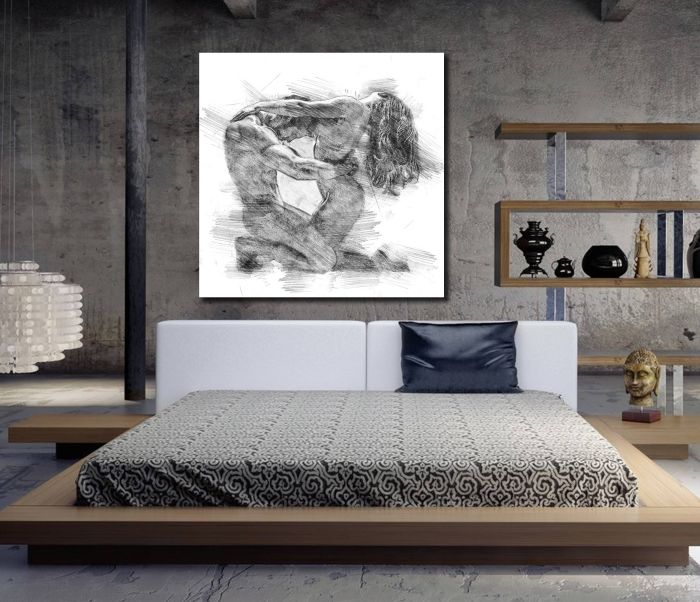
Transforming a bedroom from a simple sleeping space into a personal sanctuary often involves thoughtful consideration of its aesthetic elements. Wall art plays a pivotal role in this transformation, offering a unique opportunity to express individual style and create a calming, inviting atmosphere. This exploration delves into the diverse world of bedroom wall art, examining various styles, materials, placement techniques, and thematic considerations to help you curate the perfect artistic expression for your personal space.
From minimalist canvases to vibrant tapestries, the options are virtually limitless. We’ll navigate the nuances of color palettes, material choices, and arrangement strategies to guide you through the process of selecting and displaying wall art that not only enhances your bedroom’s visual appeal but also reflects your personality and enhances your overall well-being.
Wall Art and Overall Bedroom Design

Selecting the right wall art can significantly elevate the aesthetic appeal and overall ambiance of a bedroom. The style of the art should complement the existing furniture and décor, creating a cohesive and visually pleasing space. Careful consideration of lighting and color coordination are also crucial for achieving a harmonious and relaxing atmosphere.
Wall Art Styles and Bedroom Furniture Styles
Different wall art styles naturally pair well with various bedroom furniture styles. Modern bedrooms, characterized by clean lines and minimalist aesthetics, often benefit from abstract art, geometric prints, or photography with a contemporary feel. For instance, a large, bold abstract canvas in muted greys and whites would complement a modern bedroom with sleek, white furniture and metallic accents. In contrast, traditional bedrooms, featuring ornate furniture and rich fabrics, are enhanced by classic artwork, such as landscapes, still lifes, or framed botanical prints.
A collection of antique-style framed prints depicting historical scenes would perfectly complement a bedroom with a four-poster bed and antique dresser. Minimalist bedrooms, prioritizing simplicity and functionality, look best with understated wall art. A single, carefully chosen piece of minimalist sculpture or a simple, unframed photograph in black and white could create a focal point without overwhelming the space.
Choosing Wall Art to Enhance Lighting and Ambiance
The choice of wall art significantly impacts a bedroom’s lighting and ambiance. Light-colored artwork, particularly in matte finishes, reflects light more effectively, brightening a dimly lit room. Conversely, dark-colored or highly textured art can absorb light, creating a more intimate and moody atmosphere. The material of the artwork also plays a role; canvases with glossy finishes will reflect light differently than matte prints.
For example, a brightly colored painting on a glossy canvas will add vibrancy and energy to a room, whereas a muted pastel painting on a matte canvas will create a calming and serene atmosphere. Consider the direction and intensity of natural light in your bedroom when choosing artwork; avoid placing dark art where it will absorb natural light.
Coordinating Wall Art with Existing Bedroom Colors and Patterns
Selecting wall art that harmonizes with existing bedroom colors and patterns involves a systematic approach. First, identify the dominant colors in your bedroom’s décor – this might include wall paint, bedding, rugs, and furniture upholstery. Then, choose artwork that incorporates these colors or their complementary shades. For instance, if your bedroom is predominantly blue and white, consider artwork featuring shades of blue, white, or even complementary orange accents.
If your bedroom has a patterned wallpaper or bedding, choose artwork with similar patterns or complementary textures. For instance, if your bedding features floral patterns, consider artwork with similar botanical themes or abstract patterns with a similar color palette. Next, consider the size and placement of the artwork. Large pieces of art can create a focal point, while smaller pieces can be grouped together to create a gallery wall.
Finally, step back and evaluate the overall effect. Does the artwork enhance the existing décor, or does it clash? If necessary, make adjustments until you achieve a cohesive and pleasing visual balance.
Exploring “WALL ART” (General Discussion)
Wall art, a seemingly simple decorative element, holds a rich and complex history, reflecting societal shifts, artistic movements, and evolving tastes throughout the ages. From ancient cave paintings to modern digital prints, the human impulse to adorn walls has persisted, transforming homes into personal expressions of identity and aesthetic preferences. This exploration delves into the historical trajectory of wall art, examining its diverse forms and the enduring influence of various artistic styles.Wall art’s evolution mirrors the broader history of art itself.
Early forms, such as cave paintings and frescoes, served primarily ritualistic or narrative purposes. The development of more portable media, like tapestries and painted panels, allowed for greater flexibility in decoration, eventually leading to the widespread adoption of wall art as a key element of interior design. The Renaissance saw a flourishing of wall paintings, often commissioned by wealthy patrons and depicting scenes from mythology, history, or religious narratives.
The subsequent centuries witnessed the rise of various styles, each leaving its unique imprint on the art of adorning walls.
Artistic Movements and Their Influence on Contemporary Wall Art
The impact of major artistic movements on contemporary wall art is undeniable. For instance, the bold geometric forms and primary colors of the De Stijl movement continue to inspire minimalist and abstract wall art designs. Similarly, the expressive brushstrokes and vibrant palettes of Impressionism and Post-Impressionism find echoes in contemporary paintings and prints. The surrealist emphasis on dreamlike imagery and unexpected juxtapositions influences modern pieces that incorporate unexpected elements and challenge conventional notions of beauty.
Pop Art’s playful use of everyday imagery has led to a surge in prints and posters featuring iconic figures and consumer products. These influences blend and interweave, resulting in a diverse and eclectic range of styles available today. Many contemporary artists draw inspiration from a multitude of historical movements, creating works that blend traditional techniques with modern sensibilities.
Versatility of Wall Art in Different Rooms
The following infographic details how wall art’s adaptability enhances various spaces within a home.Infographic Description: The infographic is presented as a three-panel layout. Panel one depicts a living room featuring a large, abstract canvas as a focal point, accompanied by smaller, framed prints creating a gallery wall effect. A caption reads: “Living Room: Large statement pieces or curated gallery walls establish personality and create visual interest.” Panel two shows a bedroom with a serene landscape painting above the bed, complemented by a smaller, delicate piece on a side table.
The caption reads: “Bedroom: Calming landscapes or abstract art fosters relaxation and creates a personalized sanctuary.” Panel three displays a kitchen with vibrant, pop-art style prints adding a playful touch to a functional space. The caption reads: “Kitchen: Bold prints or playful designs inject energy and personality into this everyday space.”
Ultimately, selecting the right wall art for your bedroom is a deeply personal journey. By understanding the interplay of style, material, placement, and theme, you can create a space that is both visually stunning and emotionally resonant. Whether you choose a single statement piece or a curated gallery wall, remember that your bedroom’s art should reflect your unique identity and contribute to a relaxing and inspiring environment.
Embrace the creative process, and enjoy the transformation your carefully chosen artwork will bring to your personal haven.
Question & Answer Hub
How do I choose wall art that complements my existing furniture?
Consider the overall style of your furniture (modern, traditional, etc.) and choose artwork with complementary colors, patterns, or textures. For example, minimalist furniture pairs well with abstract art, while traditional furniture might suit framed prints of classical landscapes.
What size wall art should I choose for my bedroom?
The ideal size depends on the wall space and the overall room size. A large piece can make a statement on a blank wall, while smaller pieces work well in a gallery wall arrangement. Consider the proportions of your room and the furniture to ensure a balanced aesthetic.
How can I hang wall art without damaging my walls?
Use appropriate hanging hardware for your wall type (drywall, plaster, etc.) and the weight of your artwork. Command strips or adhesive hooks are good options for lighter pieces, while nails or screws are necessary for heavier items. Consider using a stud finder to ensure secure hanging.
How often should I change my bedroom wall art?
There’s no set timeframe; change your wall art whenever you feel your bedroom needs a refresh or your personal style evolves. Seasonal changes or a change in mood can be excellent reasons to update your artwork.


