
Wall art sets offer a dynamic way to transform any space, adding personality and visual interest. From minimalist canvases to vibrant bohemian prints, the options are as diverse as the styles they enhance. This guide delves into the world of wall art sets, exploring popular styles, materials, placement techniques, and care instructions to help you curate the perfect collection for your home.
We’ll examine the various types of art included in sets—paintings, prints, photographs, and more—and discuss how to select sets that complement different room styles and décor. We’ll also explore the history and evolution of wall art itself, placing wall art sets within a broader artistic and design context.
Popular Styles of Wall Art Sets
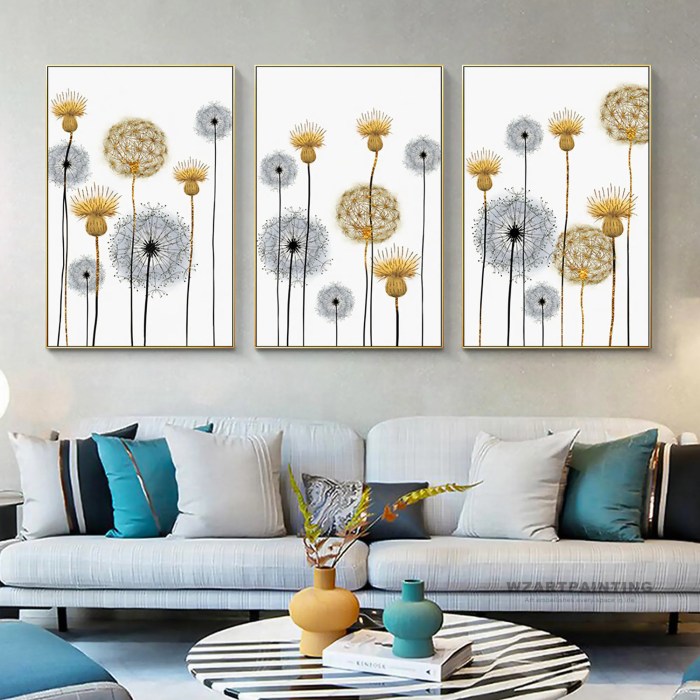
Wall art sets offer a versatile way to enhance the aesthetic appeal of any living space. Choosing the right style depends heavily on personal preference and the overall design theme of the room. Understanding the characteristics of various popular styles can greatly assist in selecting a set that perfectly complements your home décor.
Several distinct styles dominate the wall art market, each offering a unique visual impact and emotional resonance. These styles often blend and evolve, allowing for a vast array of creative possibilities. The following sections will explore five popular styles, comparing their characteristics and providing illustrative examples.
Popular Wall Art Set Styles
Five prominent styles of wall art sets include minimalist, abstract, rustic, modern, and bohemian. Each style employs distinct color palettes, subject matter, and overall aesthetic to create a specific mood and visual effect within a room.
| Style | Color Palette | Subject Matter | Overall Aesthetic |
|---|---|---|---|
| Minimalist | Neutral tones (white, beige, gray), accented with a single bold color. | Geometric shapes, simple lines, nature-inspired motifs (e.g., a single leaf, a branch). Often features negative space. | Clean, uncluttered, serene, sophisticated. Emphasizes simplicity and functionality. |
| Abstract | Vivid and contrasting colors, or muted earth tones depending on the specific sub-style. | Non-representational forms, textures, and patterns. Can be geometric or free-flowing. | Bold, expressive, thought-provoking, can be calming or stimulating depending on the color choices. |
| Rustic | Earthy tones (browns, greens, creams), muted blues, and grays. | Natural materials (wood, stone, metal), landscapes, wildlife, vintage-inspired imagery. | Warm, inviting, grounded, natural, often evokes a sense of nostalgia or connection to nature. |
| Modern | Clean lines, bold geometric shapes, and a limited color palette (often black, white, gray, with pops of color). | Abstract shapes, geometric patterns, nature-inspired forms, stylized imagery. | Sleek, sophisticated, contemporary, often features clean lines and a sense of order. |
| Bohemian | Rich, vibrant colors, often including jewel tones, earthy tones, and metallic accents. | Ethnic patterns, nature-inspired elements (plants, animals), global textiles, mandala designs. | Eclectic, layered, free-spirited, often features a mix of textures and patterns, creating a vibrant and lively atmosphere. |
Examples of Wall Art Sets by Style
Visualizing these styles through specific examples helps to solidify their unique characteristics.
Minimalist Example: A set of three canvases, each featuring a single, large geometric shape (e.g., a circle, square, triangle) in a muted gray on a white background. The shapes are subtly offset from each other, creating a balanced yet dynamic composition.
Abstract Example: A triptych of canvases showcasing a series of vibrant, overlapping color blocks. The colors might range from deep blues and greens to bright yellows and oranges, creating a dynamic and visually arresting piece. The forms are not representative of any specific object, focusing instead on the interplay of color and shape.
Rustic Example: A set of four framed prints depicting close-up shots of textured wood, weathered stone, and rustic metal. These images are accompanied by a fifth print showing a tranquil landscape scene, tying the natural elements together. The frames themselves could be made of reclaimed wood, adding to the rustic aesthetic.
Modern Example: A set of five framed prints showcasing a series of stylized geometric patterns in black and white. The patterns are bold and graphic, creating a clean and contemporary look. The frames are sleek and minimalist, further emphasizing the modern aesthetic.
Bohemian Example: A collection of framed textile prints, featuring vibrant patterns inspired by different global cultures. These might include a mandala, a traditional ikat design, and a floral pattern from a specific region. The frames could be a mix of materials and styles, reflecting the eclectic nature of the bohemian style. Perhaps one frame is ornate gold, while another is simple, unpainted wood.
Materials and Production Techniques
The choice of materials and production techniques significantly impacts the aesthetic appeal, durability, and ultimately, the cost of a wall art set. Understanding these factors allows for informed decisions when selecting or creating artwork, ensuring the final product aligns with both artistic vision and budgetary constraints. The interplay between material and method is crucial in determining the overall quality and longevity of the piece.The diverse range of materials available for wall art creation offers a wide spectrum of visual and textural possibilities.
Each material presents unique characteristics influencing the final artwork’s appearance and lifespan. Production techniques, in turn, determine the level of detail, precision, and overall artistic expression achievable.
Material Selection in Wall Art
Various materials contribute to the unique character of wall art sets. Canvas, a popular choice, provides a textured surface ideal for both oil and acrylic paintings, offering a classic and versatile option. Wood panels, often used for more contemporary styles, can be stained, painted, or left natural, showcasing the wood grain’s inherent beauty. Metal, such as aluminum or steel, offers a modern, sleek aesthetic, often used for prints or embossed designs.
Finally, paper, while perhaps perceived as less durable, allows for intricate detail in prints, watercolors, and other delicate techniques. The selection depends on the desired aesthetic, budget, and intended longevity of the artwork.
Production Technique Comparisons
Digital printing offers high-volume production with consistent quality and vibrant colors. This technique is cost-effective for mass production, allowing for detailed images and complex designs to be reproduced accurately. Hand-painting, in contrast, provides a unique, one-of-a-kind piece with visible brushstrokes and texture, reflecting the artist’s individual style and skill. The process is labor-intensive and therefore more expensive. Screen printing, a method using stencils and ink, allows for bold, graphic designs and is well-suited for producing multiple copies with consistent results, though less detail than digital printing may be achievable.
Impact of Material and Production on Quality and Price
The material and production method directly correlate with the final price and perceived quality. A hand-painted canvas artwork, for instance, will generally command a higher price due to the time and skill involved, compared to a digitally printed canvas print. Similarly, a metal wall art piece, often involving specialized equipment and processes, may be more expensive than a paper print.
Durability also plays a role; a high-quality canvas print on archival-grade canvas will be more resistant to fading and damage than a less expensive, mass-produced print on standard paper. The perceived value is often linked to the uniqueness and perceived craftsmanship, impacting the overall market price. For example, a limited-edition screen print might be priced higher than a mass-produced digital print due to its exclusivity.
Wall Art Set Placement and Design Considerations
Selecting and arranging wall art sets effectively can significantly enhance the aesthetic appeal and overall ambiance of any room. Careful consideration of room type, décor style, and the principles of design will ensure a visually harmonious and impactful result. This section explores practical strategies for optimizing wall art placement and design to achieve a cohesive and engaging interior.
Choosing the right wall art set involves understanding the interplay between the art itself and the existing room décor. Different room types and styles demand distinct approaches to wall art selection and placement.
Wall Art Set Selection for Different Room Types and Décor Styles
The ideal wall art set will complement the existing room’s style and function. A minimalist living room, for instance, might benefit from a single, large-scale piece of abstract art, whereas a vibrant, eclectic bedroom might welcome a collection of smaller, diverse framed prints. Similarly, a formal dining room might be best suited to a set of elegantly framed landscape paintings, while a playful children’s room could showcase a set of brightly colored animal prints.
Consider the existing color palette, furniture style, and overall mood of the room when making your selection. For example, a modern living room with sleek lines and neutral tones might benefit from a set of geometric wall art in muted shades of gray and white. In contrast, a rustic farmhouse-style kitchen could incorporate a set of charming botanical prints or vintage-inspired images.
Creating a Visually Appealing Arrangement of Wall Art Sets
The arrangement of a wall art set is crucial for achieving visual harmony. Consider the scale and proportion of the pieces in relation to the wall space and surrounding furniture. A grouping of small prints can look lost on a large wall, while a single oversized piece might overwhelm a small space. Maintaining a consistent theme or style within the set contributes to a unified look.
Color coordination is also vital; choose a set with a cohesive color palette that complements the room’s existing colors. Experiment with different arrangements – symmetrical for a formal look, asymmetrical for a more relaxed feel – to find the most visually appealing layout. For instance, a gallery wall featuring a collection of various sizes and shapes of framed photographs can be arranged in a grid pattern for a clean, organized look.
Alternatively, a more organic and less structured arrangement can be created by clustering the pieces together, varying their heights and distances from one another.
Using Wall Art Sets to Enhance a Room’s Focal Point
Wall art sets can effectively draw attention to a room’s focal point, such as a fireplace, a large window, or a statement piece of furniture. Positioning a striking wall art set above a fireplace mantel instantly elevates the area, making it a more visually engaging feature. Similarly, a well-chosen set can complement a large window, enhancing the view and adding visual interest to the wall space.
Consider the scale and style of the art in relation to the focal point to ensure a balanced and harmonious effect. For example, a large abstract painting placed above a fireplace in a spacious living room can create a stunning focal point, drawing the eye and adding a touch of drama to the space. Conversely, a smaller collection of framed botanical prints placed above a window seat in a cozy reading nook can enhance the feeling of warmth and intimacy.
Care and Maintenance of Wall Art Sets
Preserving the beauty and longevity of your wall art sets requires understanding the specific needs of the materials used. Proper care prevents damage and ensures your artwork remains a cherished part of your home décor for years to come. This section Artikels effective cleaning, protection, and storage techniques for various wall art materials.Proper care and maintenance extend the life of your wall art.
Different materials require different cleaning methods; improper cleaning can damage delicate pieces. Protecting your art from environmental factors like sunlight and moisture is crucial, as is careful handling to prevent physical damage. Appropriate storage safeguards your art when not displayed.
Cleaning and Maintaining Different Wall Art Materials
Different materials require specific cleaning approaches. For example, delicate canvases might require gentle dusting with a soft brush, while sturdier metal pieces might tolerate a damp cloth. Avoid harsh chemicals or abrasive cleaners that can scratch or discolor the surface. Always test any cleaning solution on an inconspicuous area first to ensure it doesn’t damage the artwork.
For framed pieces, consider cleaning the glass or acrylic with a specialized glass cleaner, avoiding harsh sprays.
Protecting Wall Art Sets from Environmental Damage
Sunlight’s ultraviolet (UV) rays can fade colors and damage certain materials over time. Avoid placing wall art in direct sunlight. Consider using UV-protective window film or curtains to filter out harmful rays. Moisture can warp wood, damage paper, and encourage mold growth. Ensure your wall art is hung in a dry environment, away from humid areas like bathrooms or kitchens.
Regular dusting prevents dust accumulation, which can dull the appearance of the artwork and potentially scratch the surface. A soft, dry microfiber cloth is ideal for regular dusting.
Proper Handling and Storage Techniques for Wall Art Sets
When handling wall art, always support the piece from the back or sides, avoiding touching the surface directly to prevent smudges or damage. For framed pieces, use care to avoid bumping or dropping the frame. When storing wall art, wrap fragile pieces in acid-free tissue paper and place them in protective boxes or bubble wrap to prevent scratches and damage.
Store the artwork in a cool, dry, and dark place to minimize the risk of damage from environmental factors. Heavy pieces should be stored horizontally to prevent stress on the frame or mounting hardware.
Wall Art: A Broader Perspective
Wall art, in its myriad forms, transcends mere decoration; it’s a powerful vehicle for artistic expression and a crucial element in shaping the atmosphere of a living space. Its history is as rich and varied as the cultures that have embraced it, evolving alongside technological advancements and shifting aesthetic preferences. From ancient cave paintings to contemporary digital prints, wall art reflects societal values, beliefs, and artistic movements.
A Historical Overview of Wall Art
Wall art’s origins can be traced back to prehistoric times, with cave paintings serving as early examples of artistic expression and storytelling. These ancient works, often depicting animals and scenes from daily life, provide valuable insights into the beliefs and practices of early human societies. Throughout history, different cultures have employed diverse techniques and materials to create wall art, reflecting their unique artistic traditions.
Ancient Egyptian tomb paintings, intricate Byzantine mosaics, and the vibrant frescoes of the Renaissance are just a few examples of how wall art has served as a means of recording history, expressing religious beliefs, and showcasing artistic skill across various eras and civilizations. The development of new materials and techniques, such as the invention of oil paints and the advent of photography and printmaking, further expanded the possibilities of wall art, leading to a greater diversity of styles and forms.
Comparing Diverse Forms of Wall Art
While wall art sets offer a curated collection, many other forms exist. Individual paintings, for example, allow for a more focused and personal expression. A single landscape painting might evoke a sense of tranquility, while an abstract piece could stimulate thought and contemplation. Tapestries, on the other hand, offer a textural dimension, often incorporating intricate designs and narrative elements.
Their woven nature adds a unique tactile quality to the artwork. Sculptures, whether wall-mounted or freestanding, introduce a three-dimensional element, adding depth and visual interest to a space. Their form and material—from bronze to wood to ceramic—can significantly impact the overall aesthetic. Each form, be it a painting, tapestry, or sculpture, contributes uniquely to the visual landscape of a room.
The choice depends on personal preference, the style of the space, and the desired impact.
The Atmospheric Influence of Wall Art
Wall art plays a significant role in setting the mood and atmosphere of a living space. A gallery wall featuring vibrant, colorful prints can create a lively and energetic atmosphere, while a single, serene landscape painting might evoke a sense of calm and tranquility. The color palette of the artwork is crucial; warm tones can create a welcoming and inviting ambiance, while cool tones can lend a sense of sophistication and serenity.
Similarly, the subject matter of the artwork influences the overall feeling. Abstract art can be stimulating and thought-provoking, while representational art can provide a focal point and create a sense of narrative. The careful selection and placement of wall art can dramatically transform the character of a room, making it a reflection of the inhabitants’ personality and taste.
For instance, a minimalist space might benefit from a single, striking piece of art, while a more eclectic space might accommodate a variety of styles and forms.
Illustrative Examples of Wall Art Sets
Let’s explore three distinct wall art sets, each showcasing a unique style and aesthetic impact. These examples highlight the versatility of wall art and how careful selection can transform a space. The design choices in each set are discussed, emphasizing the cohesive and visually pleasing outcome.
A Serene Coastal Escape
This wall art set evokes the tranquility of a seaside retreat. Imagine three canvases, each approximately 24×36 inches, arranged horizontally above a sofa. The central canvas features a breathtaking, almost photorealistic depiction of a calm ocean at sunset, with soft oranges and purples dominating the palette. To either side, two smaller canvases depict close-ups of seashells and driftwood, rendered in a more painterly style with visible brushstrokes, adding texture and a touch of rustic charm.
The subtle color variations between the canvases create a sense of harmony, while the contrast in painting styles provides visual interest. The overall effect is serene and calming, perfect for a living room or bedroom.
- Dominant color palette: Warm sunset hues (oranges, purples, soft blues).
- Style: Blend of photorealism and painterly style.
- Key elements: Ocean sunset, seashells, driftwood.
- Aesthetic effect: Serene, calming, evokes a coastal retreat.
Abstract Geometric Harmony
This set features a bold and modern aesthetic. Three square canvases, each 20×20 inches, are arranged in a staggered formation on a gallery wall. The first canvas is a vibrant splash of deep teal, punctuated by sharp, white geometric lines that create a dynamic sense of movement. The second canvas uses a complementary shade of burnt orange, with overlapping circles creating a sense of depth and layered textures.
The third canvas features a minimalist black and white composition, with intersecting lines forming an intricate pattern. The contrasting colors and geometric forms create a visually stimulating yet balanced composition. The bold, saturated colors make a strong statement, ideal for a contemporary living space or office.
- Dominant color palette: Teal, burnt orange, black and white.
- Style: Abstract geometric.
- Key elements: Geometric shapes, contrasting colors, layered textures.
- Aesthetic effect: Bold, modern, visually stimulating.
Rustic Botanical Charm
This wall art set embraces a charming, rustic aesthetic. Four framed prints, each approximately 16×20 inches, are arranged in a square formation. The prints depict detailed botanical illustrations of wildflowers and herbs, rendered in muted greens, browns, and creams. The frames are simple, rustic wooden frames that complement the natural tones of the prints. The overall effect is warm, inviting, and reminiscent of a cozy cottage or farmhouse.
The delicate detail of the botanical illustrations combined with the simplicity of the frames creates a harmonious and peaceful atmosphere. This set would be a beautiful addition to a kitchen, dining room, or bedroom.
- Dominant color palette: Muted greens, browns, creams.
- Style: Rustic botanical illustration.
- Key elements: Wildflowers, herbs, simple wooden frames.
- Aesthetic effect: Warm, inviting, rustic charm.
Ultimately, selecting and arranging wall art sets is a personal journey of self-expression. By understanding the various styles, materials, and design considerations, you can create a visually stunning and emotionally resonant space. Whether you prefer minimalist elegance or bold bohemian flair, the right wall art set can transform a room from ordinary to extraordinary, reflecting your unique taste and adding a touch of artistry to your life.
FAQ Insights
How do I choose the right size wall art set for my room?
Consider the room’s size and the wall space available. Larger rooms can accommodate larger sets, while smaller rooms may benefit from smaller, more proportionate sets. Ensure the set’s overall dimensions are in scale with the furniture and other elements in the room.
Can I mix and match wall art from different sets?
Absolutely! Mixing and matching can create a unique and eclectic look, but be mindful of maintaining a cohesive color palette and style to avoid a cluttered appearance. Consider using similar frames or consistent color tones to tie the pieces together.
How often should I clean my wall art sets?
The frequency depends on the material and environment. Dust regularly with a soft cloth or feather duster. For more thorough cleaning, use a slightly damp cloth (avoid excessive moisture) and always test on an inconspicuous area first. For delicate pieces, consider professional cleaning.


